Quality
2 min read
Peptide purity vs peptide content: what the numbers mean
A purity percentage and a quantity in milligrams describe different things. Here is how to read them together without assuming more than a report shows.
Read articleFree UK delivery · Batch certificatesFree UK delivery on every order · Batch certificates · UK stocked · Royal Mail Tracked 24
The HelixCore journal
Explore the science behind research peptides, the meaning of analytical results, and the details that matter in the laboratory.
Start with the evidence. Explain what it shows, acknowledge what it cannot establish, and make technical information easier to understand. Our articles bring that approach to compound profiles, quality documentation and laboratory practice.
Written for in-vitro laboratory research. Not for human or veterinary use.
From the journal
22 articles · Newest first
A purity percentage and a quantity in milligrams describe different things. Here is how to read them together without assuming more than a report shows.
Read article
Why peptide reports often include both a chromatogram and a mass spectrum, and what researchers can learn from each.
Read article
Chemical purity does not establish sterility or an endotoxin result. A guide to keeping these measurements separate when reviewing research materials.
Read article
How to separate a handling recommendation from measured stability, and which details to record when reviewing a peptide's storage history.
Read article
A literature-grounded overview of the copper tripeptide GHK-Cu — its copper-carrier biochemistry, the modern gene-expression research, its skin and matrix biology, and where the evidence is solid versus speculative.
Read article
What MOTS-c is, why a peptide encoded in the mitochondrial genome is biologically remarkable, its AMPK and metabolic signalling, the nuclear-translocation finding, and the honest state of the human evidence.
Read article
A careful look at Epitalon — the tetrapeptide bioregulator, its telomerase and pineal research, the research lineage it comes from, and why its extraordinary claims need the ordinary standard of independent replication.
Read article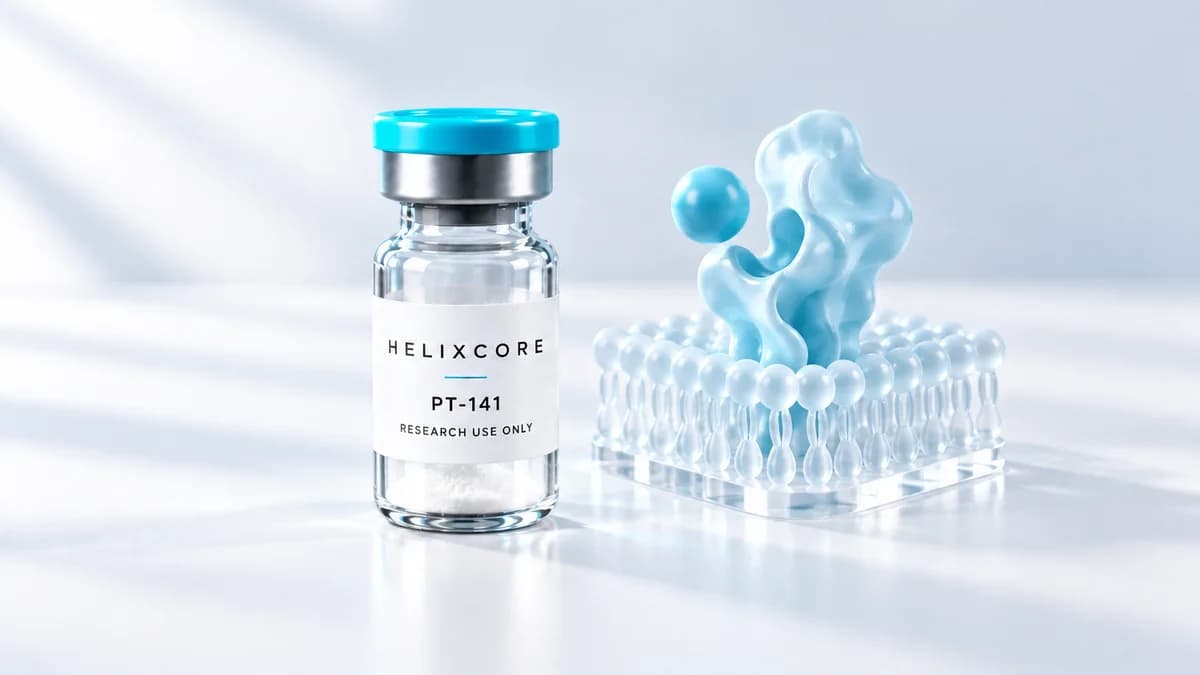
PT-141 is one of the few research-catalogue compounds whose parent molecule became an approved medicine. An overview of its MC3R/MC4R melanocortin mechanism, its relationship to Melanotan II, and its unusually clear regulatory picture.
Read article
A practical laboratory workflow for receiving, storing and documenting research peptides, using conditions and holding periods supported for the specific material.
Read article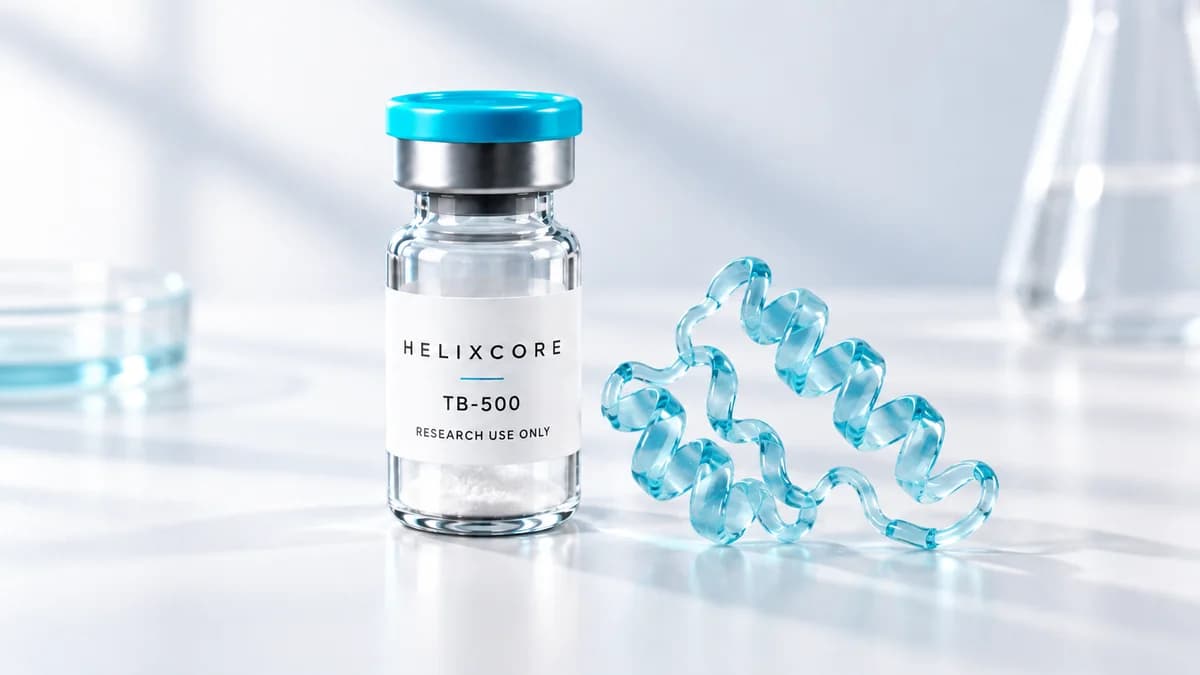
A literature-grounded overview of TB-500 — what it actually is, how it differs from full-length Thymosin Beta-4, the actin-regulation mechanism, the preclinical evidence, and how it compares with BPC-157.
Read article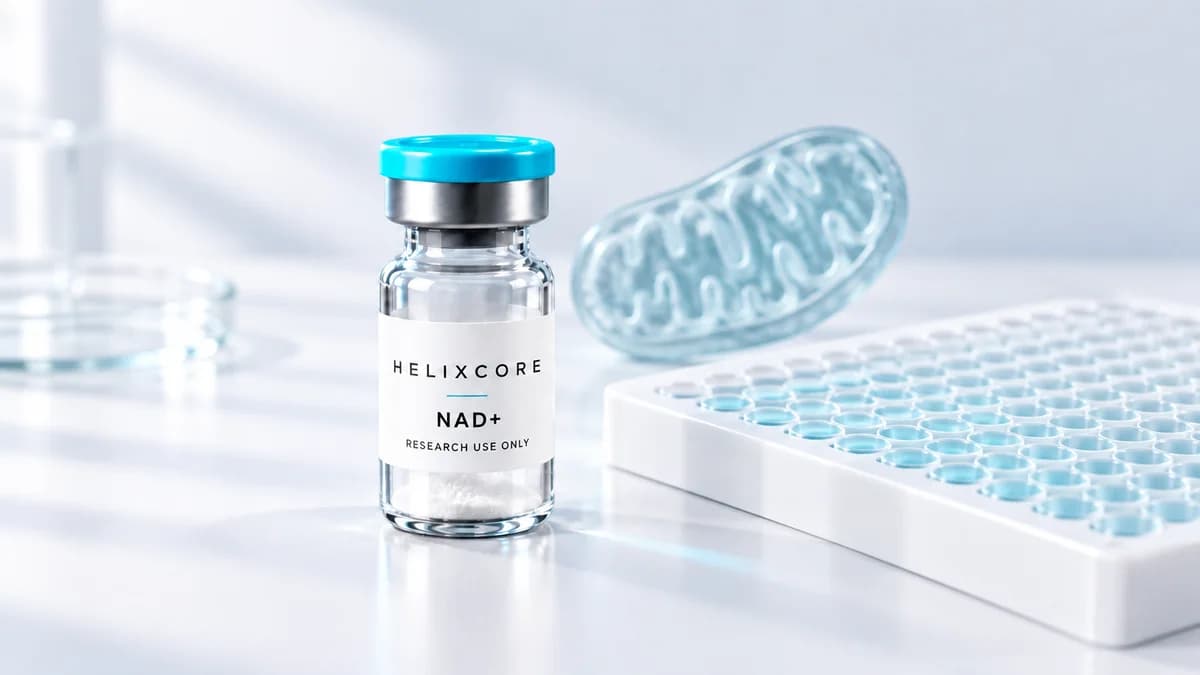
What NAD+ is, why it is central to metabolism and sirtuin/PARP signalling, the salvage pathway and its precursors NMN and NR, where the ageing research focus sits, and the delivery problem that shapes the field.
Read article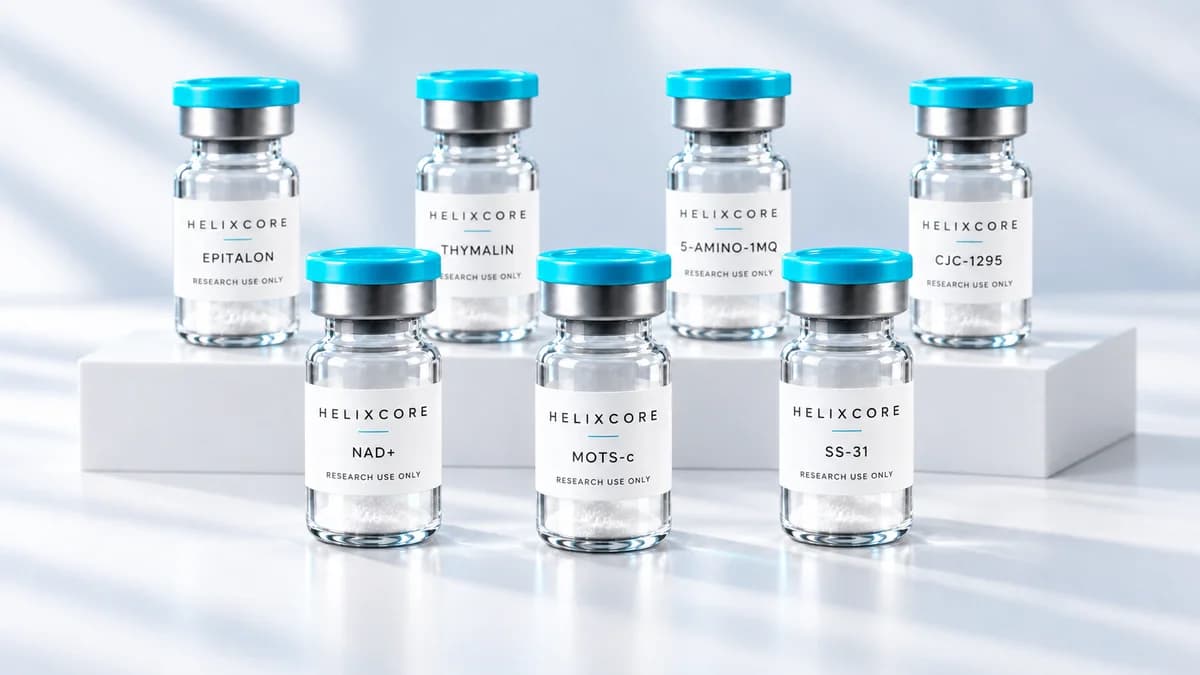
A rundown of the seven research compounds seeing the most attention in current peptide research — NAD+, 5-Amino-1MQ, MOTS-c, SS-31, Epitalon, CJC-1295 With DAC and Thymalin. Each with the literature context.
Read article
Plain-language orientation for researchers new to peptide work — what the categories are, what to look for in a supplier, what mistakes to avoid, and where to start.
Read article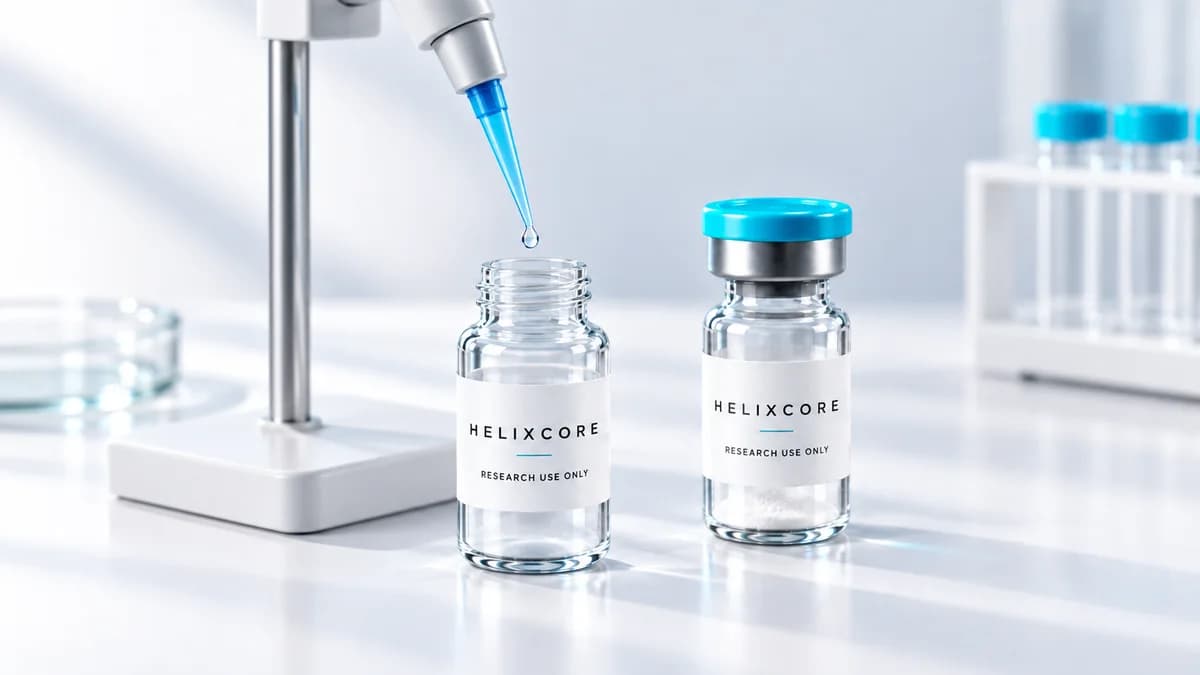
The standard lab approach to reconstituting freeze-dried peptides: choosing solvent, the step-by-step technique, storage after reconstitution, and the most common mistakes that waste material.
Read article
Where research peptides sit in UK law, what "Research Use Only" actually means, who can purchase, and what to look for in a UK supplier. Practical orientation for researchers.
Read article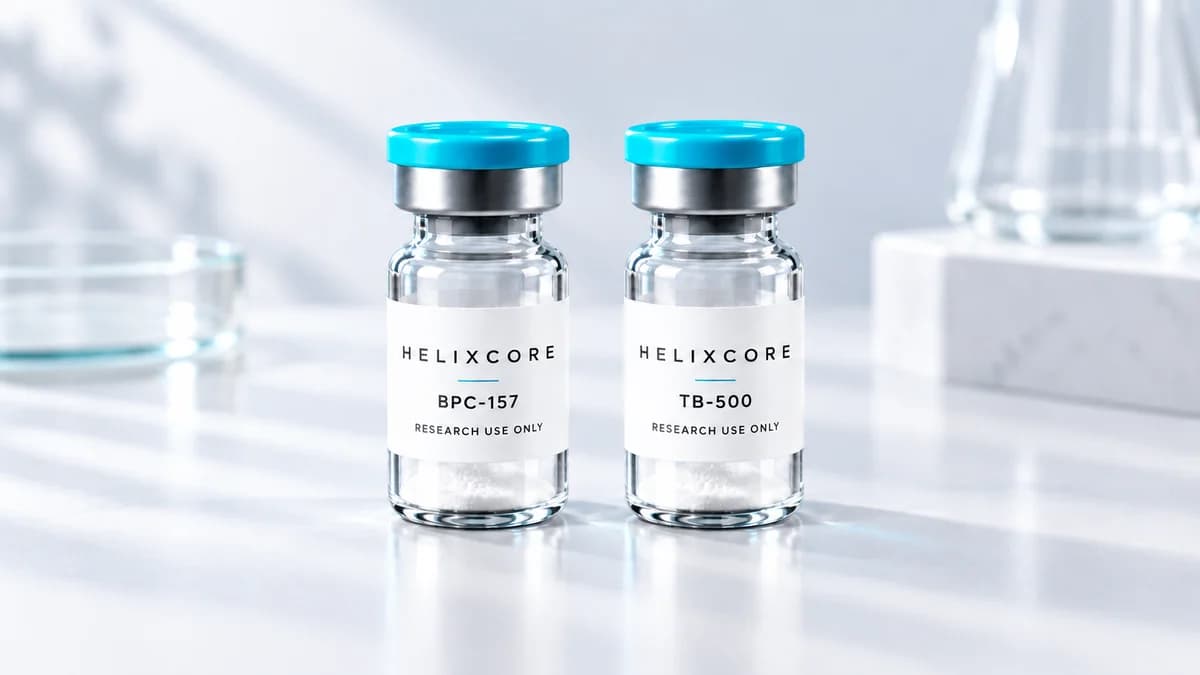
A structural and mechanistic comparison of the two most-studied tissue research peptides. How they actually differ, where the published research focuses, and when to use each in in-vitro experimental design.
Read article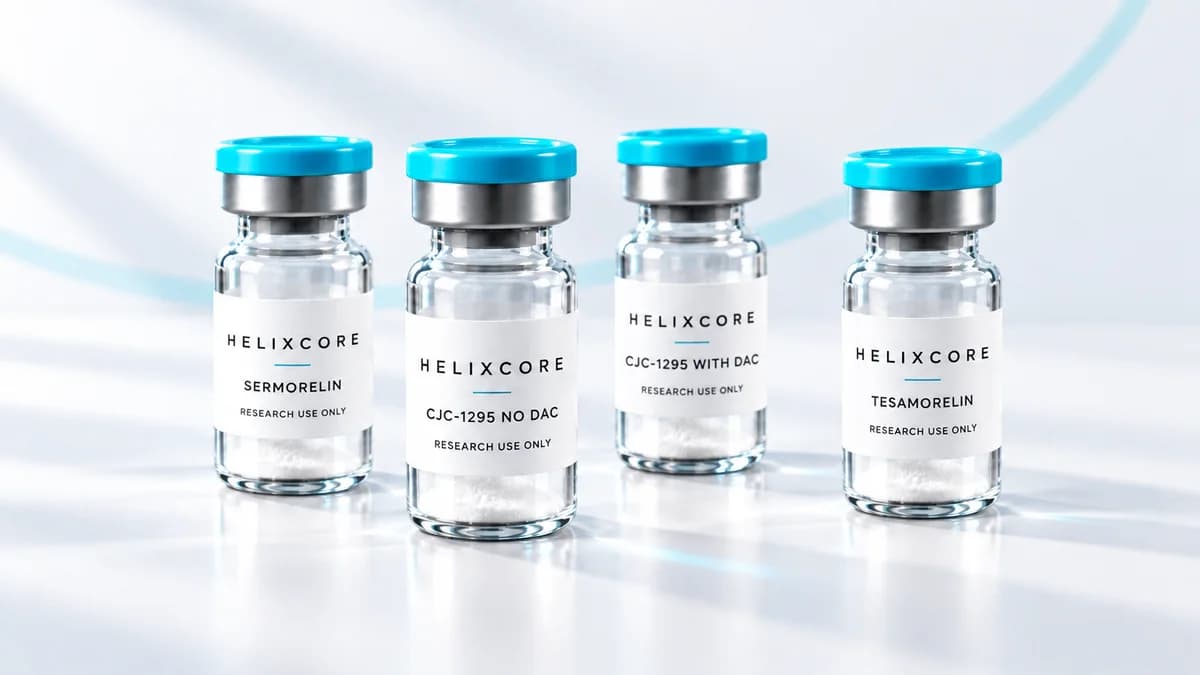
The four most-studied GHRH analogues side by side — Sermorelin, CJC-1295 No DAC, CJC-1295 With DAC, and Tesamorelin. Structure, half-life, and which is the right research tool for what.
Read article
How manufacturer certificates differ from independent laboratory reports, and why the connection between a tested sample and supplied stock matters.
Read article
When cold-chain shipping is essential, when it's a premium upsell that adds no functional value for the buyer, and how to think about the decision for your specific compound and transit conditions.
Read article
A practical checklist for reviewing identifiers, results, specifications and missing information on a peptide certificate of analysis.
Read article
A literature-grounded summary of BPC-157 — its origin, sequence, the preclinical research, and the open questions. No claims, just the evidence.
Read article
A structural and receptor-level comparison of the three most common GH secretagogue research peptides — sequence, receptor target, half-life, and published experimental context.
Read article