Updated
Batch testing and COAs: understanding the source of the evidence
How manufacturer certificates differ from independent laboratory reports, and why the connection between a tested sample and supplied stock matters.
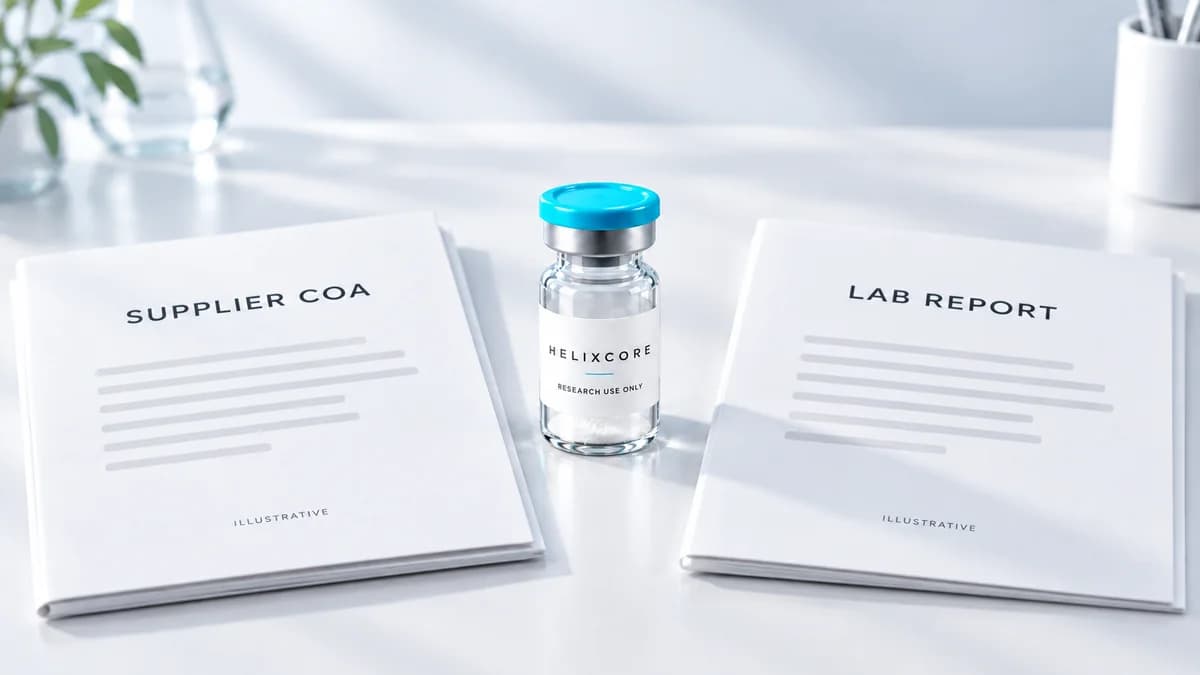
A certificate is most useful when you can identify who issued it, which sample it describes and how that sample relates to the material supplied. “Batch tested” alone does not answer those questions.
This guide explains the source of the evidence. For help interpreting particular measurements, read our separate guide to HPLC and mass spectrometry.
Manufacturer certificates and independent reports
A manufacturer certificate of analysis records results or specifications supplied by the organisation producing the material. An independent laboratory report records analytical work performed by a separate organisation. Both need to be read in context; they should not be described as the same thing.
A retailer publishing a manufacturer certificate does not turn it into independent testing. Equally, a report from an external laboratory does not automatically establish that the tested sample represents the retailer's current stock.
Connect the sample to the stock
Start with the document's compound name, sample reference and batch identifier. Then check how the supplier connects those references to the material being supplied. Similar product names alone do not establish a batch match.
For a practical review, ask:
- Who issued the document, and who submitted the sample where that is recorded?
- What was tested, and when?
- Which lot or sample reference appears on the report?
- Is there a documented link to the supplied stock?
- Are all pages and the stated analytical results available?
If the link is missing, describe the document as background evidence until that connection is established. Avoid treating a report for another lot as a result for the vial in front of you.
Keep each measurement within its scope
Mass spectrometry can support an identity assessment through the observed mass. HPLC can describe the detected impurity profile under the method used. Neither measurement, by itself, answers every question about structure, quantity or experimental suitability.
A purity percentage should not be substituted for peptide content, and an assumed counterion percentage should not be subtracted from a label quantity to invent an assay result. Bachem's quality-control guide distinguishes identity, purity and content measurements. Our purity versus content article explains the practical difference.
What HelixCore publishes
HelixCore's certificate registry identifies supplied manufacturer/source certificate figures. It separately identifies supplier-submitted Vanguard laboratory reports addressed to Panda Peptides; those reports have not been mapped to HelixCore stock batches. Neither collection is presented as independent testing commissioned by HelixCore.
Check the current registry and the relevant product information rather than assuming every document carries the same provenance. The Quality page describes how supplied certificate figures are presented.
Use the document to support a decision
Keep a copy of the report and the batch reference with your laboratory records. If a result or stock connection is unclear, ask for clarification before relying on it. A report characterises the submitted sample within the scope of its tests; it does not establish sterility, shelf life or suitability for human or veterinary use unless those separate questions have actually been addressed. HelixCore materials remain for in-vitro laboratory research only.