Peptide stability: why a storage temperature is only part of the story
How to separate a handling recommendation from measured stability, and which details to record when reviewing a peptide's storage history.
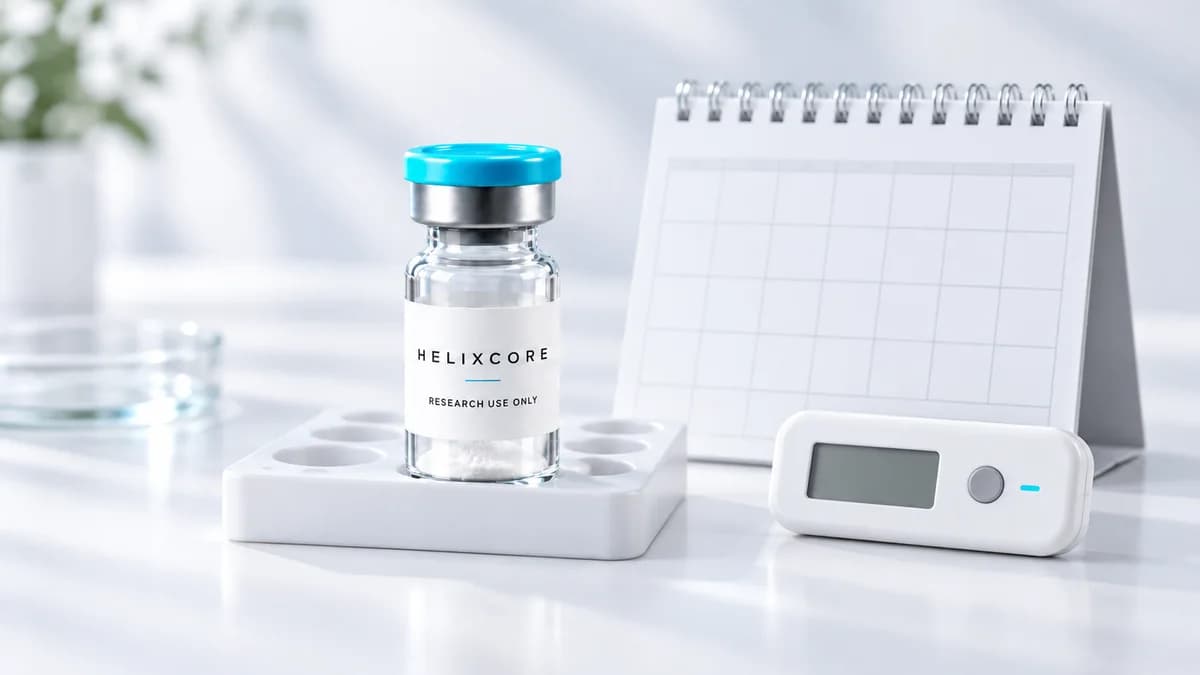
A storage temperature is an instruction about handling. A stability claim is a conclusion about how a material behaves over time under stated conditions. The two belong together, but they are not the same piece of evidence.
Start with the form of the material
A lyophilised powder and a solution should not be assumed to share the same storage behaviour. Water exposure, the solution environment and the peptide's sequence can affect what happens during storage. Bachem's handling guidance distinguishes dry material from solutions and notes that some amino-acid residues require particular care.
General guidance is a useful starting point. The product's own documentation and a laboratory's validated procedures should govern the conditions chosen for a specific material.
The handling history matters
Moisture exposure and repeated handling can complicate a storage record. Bachem recommends allowing a cold, closed sample to equilibrate appropriately before opening, and discusses aliquoting solutions to support storage. These are general handling principles, not proof of a particular shelf life for every peptide.
Record what actually happened. A note such as “stored frozen” leaves open the temperature, duration, container, material form and any interruptions.
What would support a shelf-life claim?
A useful stability assessment connects a defined sample to defined conditions, time points and measurements. When reviewing a claim, ask:
- Which compound, formulation and batch were studied?
- Was the material dry or in solution?
- What storage conditions and duration were evaluated?
- Which analytical measurements were repeated?
- What criteria were used to decide whether the material remained acceptable?
These questions help identify whether a claim applies to the material in front of you. An initial certificate characterises the submitted sample at testing; it does not by itself establish what happens after a different storage history.
Build a usable laboratory record
Keep the receipt date, batch identifier, storage location and relevant handling events together. If an excursion occurs, document the known conditions and seek advice based on the specific material. Avoid guessing an expiry date from a general blog, a different compound or the appearance of the powder.
For more background, read our laboratory storage guide. For batch documentation, use the certificate registry. Where stability data are unavailable, describe that uncertainty plainly instead of turning a recommended temperature into a guaranteed lifetime.