GHK-Cu (copper peptide): where the research stands
A literature-grounded overview of the copper tripeptide GHK-Cu — its copper-carrier biochemistry, the modern gene-expression research, its skin and matrix biology, and where the evidence is solid versus speculative.
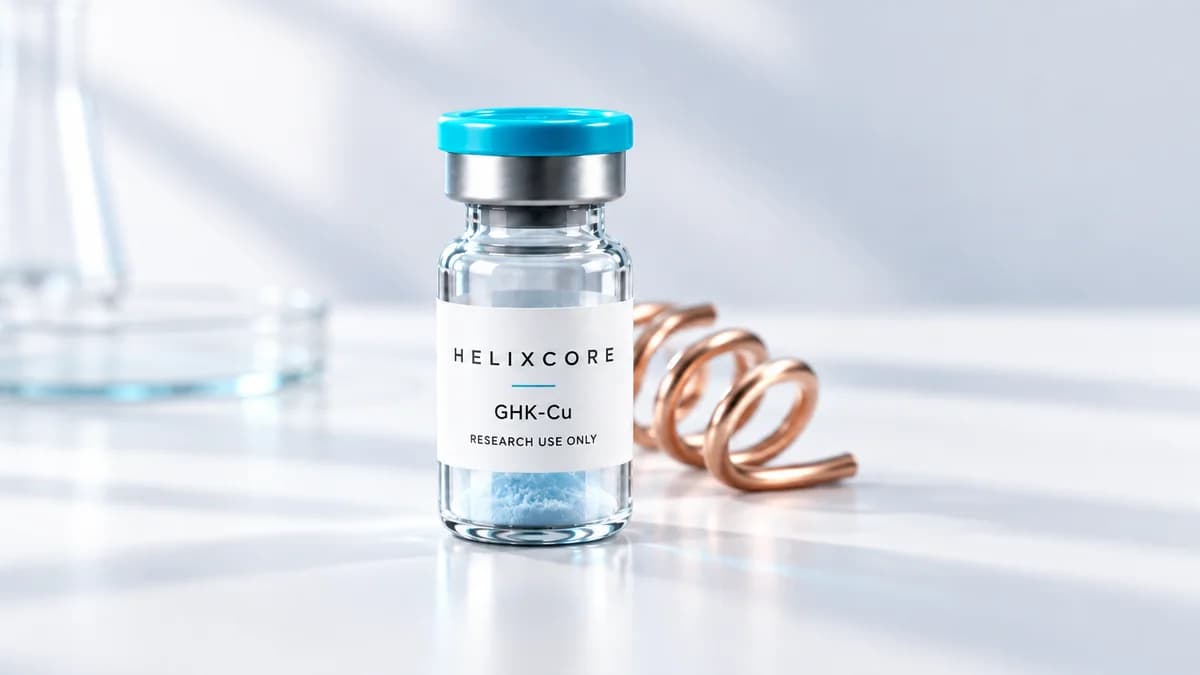
GHK-Cu is one of the older and better-characterised molecules in the research-peptide catalogue. It has been studied since the 1970s, has a genuinely defined biochemistry, and appears in a large body of dermatological and wound-healing literature. That maturity makes it a useful contrast to the many newer compounds whose evidence base is thin.
What it is
GHK-Cu is a copper-binding tripeptide: glycyl-L-histidyl-L-lysine (GHK) complexed with a copper(II) ion. The GHK sequence occurs naturally in human plasma, where its concentration declines with age — a fact that has driven much of the interest in it. The copper complex is the biologically active form studied in most of the literature. Its molecular weight is about 340 g/mol for the tripeptide, and it is usually supplied as a blue-tinted powder or solution, the colour coming from the bound copper.
The mechanistic picture
Copper delivery
A central idea is that GHK acts as a physiological carrier for copper, a trace element required by numerous enzymes involved in tissue remodelling and antioxidant defence. By binding and shuttling copper, GHK-Cu may influence processes that depend on copper availability.
Gene expression
The most striking modern research comes from gene-expression profiling. Studies report that GHK-Cu modulates a large number of human genes, shifting expression patterns in cultured cells toward what the authors describe as a more regenerative, less inflammatory profile. This is the line of work that reignited interest in the molecule in the 2010s.
Matrix and skin biology
In dermal fibroblast cultures, GHK-Cu has been reported to affect the synthesis of collagen, elastin and other extracellular-matrix components, and to influence the enzymes that remodel that matrix. This underpins its long association with skin and wound research.
What has been demonstrated
- Effects on collagen and glycosaminoglycan synthesis in fibroblast cultures.
- Wound-contraction and tissue-repair signals in animal models.
- Broad gene-expression changes in profiling studies of cultured human cells.
- Antioxidant-associated effects in various in-vitro systems.
GHK-Cu is also one of the few compounds in this space with a real cosmetic-ingredient history: the tripeptide appears in topical skincare formulations, a separate regulatory category from research chemicals. That does not translate to any claim for the research-grade material, but it does mean the underlying skin biology has been examined more thoroughly than for most peptides.
What has not happened
Despite the depth of the in-vitro and cosmetic literature, GHK-Cu is not an approved medicine, and the systemic (non-topical) research remains predominantly preclinical. The gene-expression findings are intriguing but are exactly the kind of result that needs independent replication before strong conclusions are drawn.
Specifications you will see
For research use, GHK-Cu is commonly supplied in larger masses than most peptides — 50mg or 200mg vials are typical — reflecting its use in matrix and cell-culture research. The blue tint is normal and comes from the copper. Store cold and dry; see the storage guide for handling.
Bottom line
GHK-Cu is a mature, mechanistically grounded research molecule with a long literature and a clear copper-carrier biochemistry. The modern gene-expression work is what makes it interesting again, and also what most needs replication. As a research tool it is on firmer footing than many trendier compounds.
HelixCore stocks GHK-Cu in 50mg and 200mg vials, 98%+ purity per source specifications. The supplied batch certificate is published on the product page. UK stock, Royal Mail Tracked 24 dispatch, supplied strictly for in-vitro laboratory research use only.