TB-500 (Thymosin Beta-4): where the research stands
A literature-grounded overview of TB-500 — what it actually is, how it differs from full-length Thymosin Beta-4, the actin-regulation mechanism, the preclinical evidence, and how it compares with BPC-157.
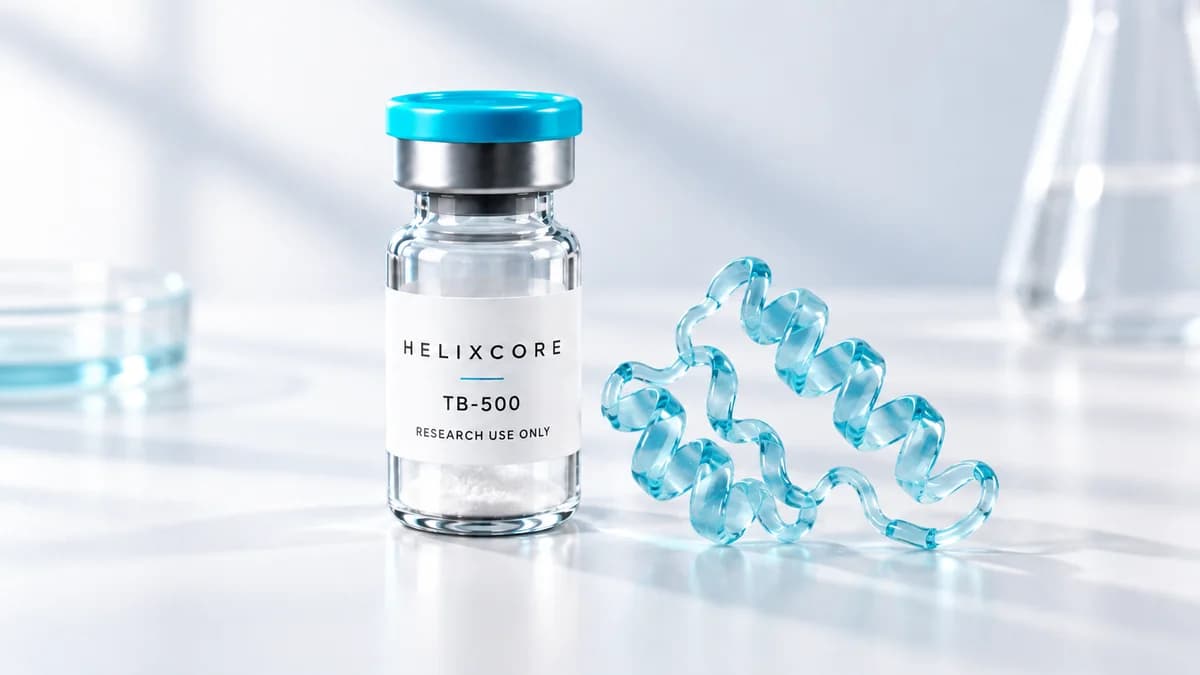
TB-500 is one of the two peptides — alongside BPC-157 — that dominate the tissue-repair corner of the research-peptide world. It is frequently discussed as if it were a drug with established effects, when in reality it is a synthetic fragment of a naturally occurring protein whose biology is well understood in parts and speculative in others. This is a summary of where the actual research stands.
What it is
TB-500 is a synthetic peptide based on the active region of Thymosin Beta-4 (Tβ4), a 43-amino-acid protein found in almost all human cells and present at high concentrations in wound fluid and platelets. TB-500 corresponds to the part of the Tβ4 sequence responsible for its best-characterised function, which is binding actin.
A point that causes constant confusion: TB-500 and Thymosin Beta-4 are related but not identical. Full-length Tβ4 is the endogenous protein used in formal clinical research; TB-500 is the shorter synthetic fragment sold for laboratory use. Suppliers and papers sometimes use the names interchangeably, which they should not.
The mechanistic picture
Actin regulation
The core, well-supported function of Thymosin Beta-4 is actin sequestration. It binds monomeric (G-)actin and acts as a buffer in the dynamic assembly and disassembly of the actin cytoskeleton. Because cell migration, shape change and division all depend on actin remodelling, this single biochemical role plausibly connects to a wide range of downstream effects.
Cell migration and angiogenesis
In vitro and animal work reports that Tβ4 promotes the migration of endothelial cells and keratinocytes and supports the formation of new blood vessels. This is the research line most often cited in the context of wound models.
Inflammation and fibrosis
Several studies report modulation of inflammatory signalling and, in some models, reduced fibrosis (scarring). The evidence here is more mixed and model-dependent than the actin biochemistry, which is not in doubt.
What has been demonstrated in models
The preclinical literature on Thymosin Beta-4 is broader and, in places, more clinically advanced than BPC-157, because the full-length protein has itself been the subject of formal trials. Reported findings across in-vitro and animal work include:
- Accelerated dermal wound closure in rodent models.
- Corneal and epithelial repair effects, which reached human clinical study for the full-length protein in dry-eye and corneal conditions.
- Cardioprotective and cardiac-repair signals in models of induced cardiac injury.
- Promotion of endothelial cell migration in angiogenesis assays.
The important distinction is that much of the higher-quality human evidence concerns full-length Thymosin Beta-4, not the TB-500 fragment specifically. Inferring that the fragment reproduces every property of the parent protein is an assumption, not a finding.
TB-500 versus BPC-157
The two are frequently paired and frequently confused. In short: BPC-157 is a fragment of a gastric protective protein with a still-uncertain receptor; TB-500 is a fragment of an actin-binding protein with a clear primary biochemical mechanism. They are studied in overlapping tissue-repair contexts but are structurally unrelated. A dedicated comparison is available in our BPC-157 vs TB-500 breakdown.
What has not happened
There are no large-scale human clinical trials of the TB-500 fragment as a licensed therapeutic. It is not an approved medicine in the UK, EU or US. It is also worth noting that Thymosin Beta-4 and its fragments appear on the WADA prohibited list for athletes. For a research context this is simply part of the compound's regulatory picture; it is not sold or supplied for use in humans or animals.
Specifications you will see
For research use, TB-500 is typically supplied as a lyophilised acetate salt in 5mg or 10mg vials. It is a straightforward unmodified peptide with no special stability modifications. Store the lyophilised powder cold and dry; once reconstituted, keep refrigerated and use within a few weeks. See our peptide storage guide for the detail.
Bottom line
TB-500 sits on a firmer mechanistic foundation than much of the research-peptide field, because its parent protein's actin-binding role is genuinely well established and the full-length protein has reached human study. The gap to watch is the one between the parent protein and the marketed fragment, and between animal wound models and any human translation. As always, the useful question is not what a compound might do, but what the published, replicated data actually show.
HelixCore stocks TB-500 in 5mg vials, 98%+ purity per source specifications. The supplied batch certificate is published on the product page. UK stock, Royal Mail Tracked 24 dispatch, supplied strictly for in-vitro laboratory research use only. See also the BPC-157 vs TB-500 comparison.