Cold-chain shipping for research peptides: when it matters
When cold-chain shipping is essential, when it's a premium upsell that adds no functional value for the buyer, and how to think about the decision for your specific compound and transit conditions.
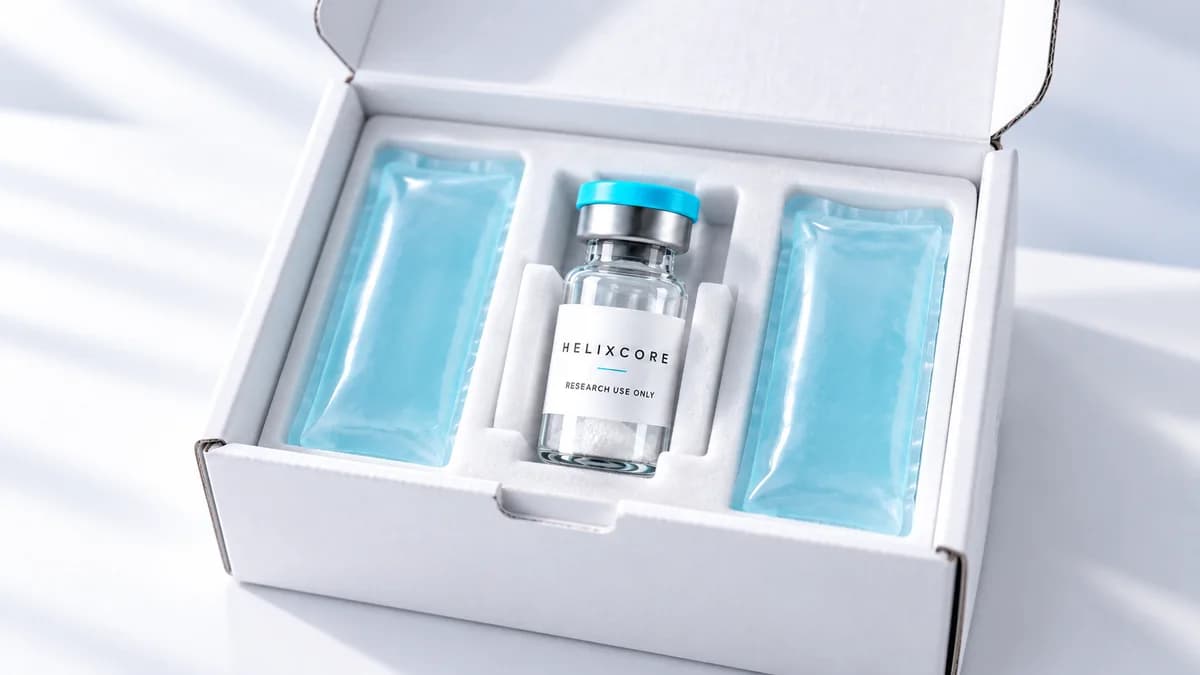
Cold-chain shipping is a common upsell in the UK research peptide market. Suppliers offer it as a premium delivery option, sometimes with messaging that suggests it's essential for product integrity. The actual picture is more nuanced — for most lyophilised research peptides shipped via UK Tracked 24, cold-chain shipping doesn't meaningfully affect stability.
This article walks through when cold-chain shipping does and doesn't matter for research-grade peptides, what UK shipping conditions actually look like, and how to think about whether the upsell is worth it for your specific compound.
What "cold chain" means
Cold-chain shipping is the practice of maintaining a controlled low temperature — typically 2–8°C, sometimes −20°C or below — throughout the entire shipping route from supplier to recipient. In pharmaceutical and biotechnology contexts, this is essential for products like vaccines, insulin (in solution), and reconstituted biologics.
Maintaining cold chain involves insulated packaging, refrigerant gel packs or dry ice, validated thermal shippers, and tracked-temperature logging. Genuine cold-chain logistics is expensive — typically £15–£40 above standard shipping — because the consumables and the operational overhead are real costs.
What makes a research peptide "stable" in transit
Lyophilised research peptides — the standard supplied format — are remarkably stable. Freeze-drying removes the water that enables most degradation pathways (hydrolysis, deamidation, oxidation requires water as a reactant or vehicle). In the lyophilised form, sealed in a sterile vial:
- Stability at −20°C: typically 2+ years
- Stability at room temperature (15–25°C): typically several months to a year
- Stability at elevated temperatures (30–40°C): weeks rather than months, but still significant
The implication: a lyophilised peptide that spends 24–72 hours in transit at UK ambient temperatures is not at meaningful risk of degradation. Royal Mail Tracked 24 typically delivers within 1–2 working days within the UK, and UK weather rarely produces sustained transit temperatures above ~25°C.
When cold-chain shipping does matter
There are specific cases where cold-chain shipping for research peptides genuinely matters:
Pre-reconstituted solutions
Some suppliers sell pre-mixed peptide solutions — sometimes in ready-to-use pen-cartridge format. Pre-reconstituted products are dramatically less stable than lyophilised vials. For these, cold-chain shipping is essential, because solution-phase peptides degrade significantly at room temperature within days.
Particularly heat-sensitive compounds
A small number of research compounds have known thermal sensitivity that warrants cold transit. Examples include some larger thymosin variants, certain bioregulator preparations, and a few specific glycopeptides. If the source datasheet specifies "ship cold", follow it.
Long international transit
International shipments routinely spend 5–14 days in transit with extended time at customs warehouses where temperature is uncontrolled. For shipments going from China to the UK, or from the UK to remote international addresses, cold-chain considerations are different from a domestic UK Royal Mail Tracked 24 delivery.
Summer transit during extreme weather
UK heatwaves push package compartment temperatures above ambient — Royal Mail vans can hit 35–40°C internally during heatwave days. For most lyophilised peptides this is still within their thermal tolerance, but for genuinely heat-sensitive compounds during a multi-day heatwave, cold packs may be warranted.
When cold-chain shipping doesn't matter
For the vast majority of standard lyophilised research peptides shipped domestically within the UK on 1–2 day tracked delivery, cold-chain shipping is operationally unnecessary. This includes:
- Standard lyophilised peptides (BPC-157, TB-500, GHK-Cu, the GHRH analogues, Ipamorelin, GHRP-6, etc)
- Small molecules (5-Amino-1MQ, AICAR, SLU-PP-332)
- Reconstitution solvents (bacteriostatic water, acetic acid solutions)
- Most peptide bioregulators in the freeze-dried form
For these products, the buyer is paying for cold-chain packaging that isn't doing anything functional during a 24–48 hour UK domestic transit. That doesn't make it scam-priced — buyers may want it for peace of mind, for documentation reasons, or because they're ordering during a heatwave — but it's genuinely optional rather than required.
How to think about the decision
The question to ask is "does my specific compound need it, given my specific transit conditions?" A useful decision tree:
- Lyophilised peptide shipping to a UK address on standard 1–2 day tracked? Cold-chain is optional.
- Pre-reconstituted solution or pen cartridge? Cold-chain is essential.
- Source datasheet specifies cold transit? Follow the datasheet.
- Shipping internationally with multi-day transit? Cold-chain is worth considering.
- Heat-sensitive compound during a heatwave? Cold-chain is worth considering.
The HelixCore approach
HelixCore ships standard lyophilised research peptides via Royal Mail Tracked 24 in temperature-controlled storage facilities at our UK warehouse, in plain lab-appropriate packaging. We don't default to cold-chain shipping because for most of our catalogue it doesn't add functional value during 1–2 day UK transit — and we'd rather not pass on a £15+ upsell that doesn't do anything for the buyer.
Where a specific compound benefits from cold transit, we'll flag it on the product page. If you have specific transit concerns — a heatwave window, a long international forward route, or a compound where you want documented cold transit for institutional reasons — get in touch at hello@helixcore.co.uk and we can accommodate.
Bottom line
Cold-chain shipping is essential for some products (pre-reconstituted solutions, specific heat-sensitive compounds) and operationally unnecessary for most lyophilised research peptides shipping on standard 1–2 day UK tracked delivery. The upsell exists across the UK market in part because it generates supplier revenue and in part because for some buyers it offers peace of mind.
Knowing when it actually matters — and when it's a comfort spend — helps you spend your research budget on the things that move the experimental needle.
HelixCore stocks all our research compounds in temperature-controlled UK storage and ships same business day via Royal Mail Tracked 24. Browse the catalogue.