Peptide purity vs peptide content: what the numbers mean
A purity percentage and a quantity in milligrams describe different things. Here is how to read them together without assuming more than a report shows.
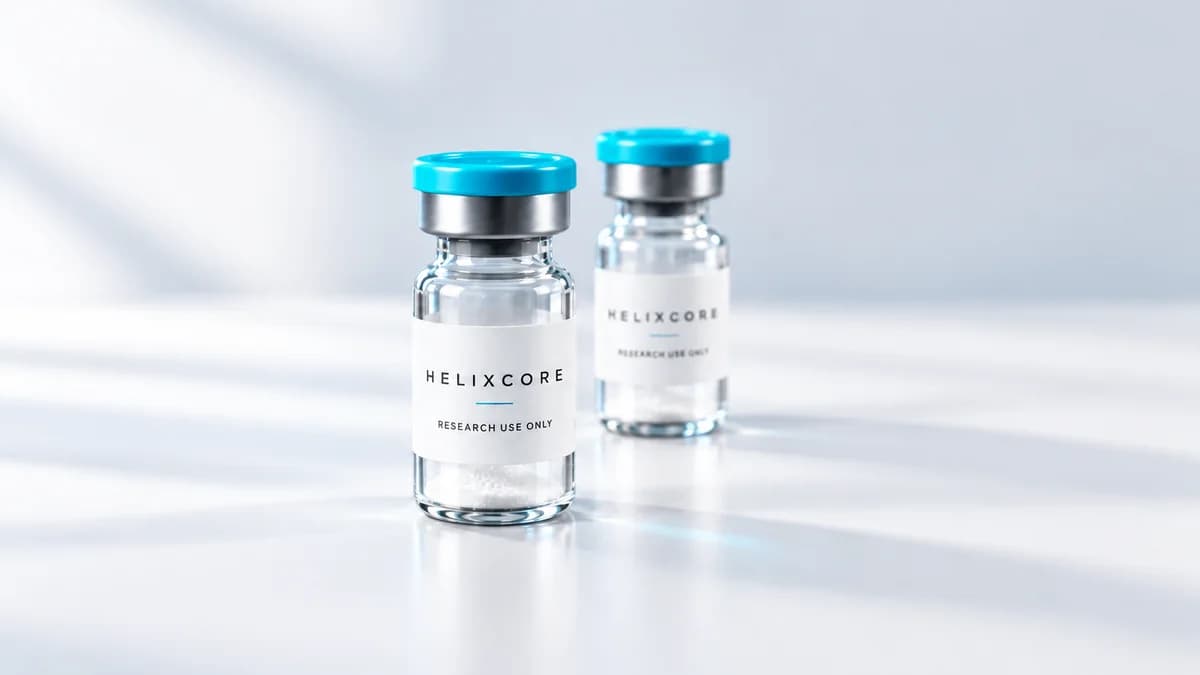
A vial label might show a quantity in milligrams while its certificate reports an HPLC purity percentage. Both numbers can be useful, but they answer different questions. For a laboratory comparing materials or planning an experiment, treating them as interchangeable creates an avoidable gap in the records.
What HPLC purity describes
An HPLC analysis separates components under a particular set of conditions. A commonly reported purity value expresses the target peak as a proportion of the detected peak area. It depends on the method, detector and integration used. It is not automatically the percentage of everything inside a vial that is the desired molecule. Bachem explains this distinction in its peptide quality-control guide.
What peptide content describes
A dried preparation can contain peptide material alongside counterions and moisture. Net peptide content describes the peptide fraction of that preparation. Bachem distinguishes this from chromatographic purity: a material can have a high HPLC purity while its net peptide content is lower.
That distinction also matters when reading a quantity claim. Ask whether a number describes gross material, peptide content, or an assay of the target compound. Do not silently substitute one measurement for another.
A simple example
Imagine two hypothetical 10 mg samples, both reported as 99% HPLC purity. If one has a measured net peptide content of 80% and the other 90%, the same gross weight does not represent the same amount of peptide material. The 99% figure alone cannot resolve that difference.
This is an illustration of report interpretation, not a statement about a HelixCore batch. A calculation is only as reliable as the measurements and definitions supporting it. GenScript describes the separate measurements used to account for peptide, counterions and water.
Questions to keep with the report
- Which method produced the purity percentage?
- Is the quantity measured, nominal, or calculated?
- Is net peptide content reported separately?
- Are the units and sample identifiers clear?
- Which information is missing and still needs clarification?
HelixCore publishes supplied batch certificates with figures reported per source specifications. Read the relevant document in the certificate registry, and keep its terminology when recording results. If a report gives purity but no content assay, record that limitation rather than filling in the missing value.