The most-studied research peptides in 2026
A rundown of the seven research compounds seeing the most attention in current peptide research — NAD+, 5-Amino-1MQ, MOTS-c, SS-31, Epitalon, CJC-1295 With DAC and Thymalin. Each with the literature context.
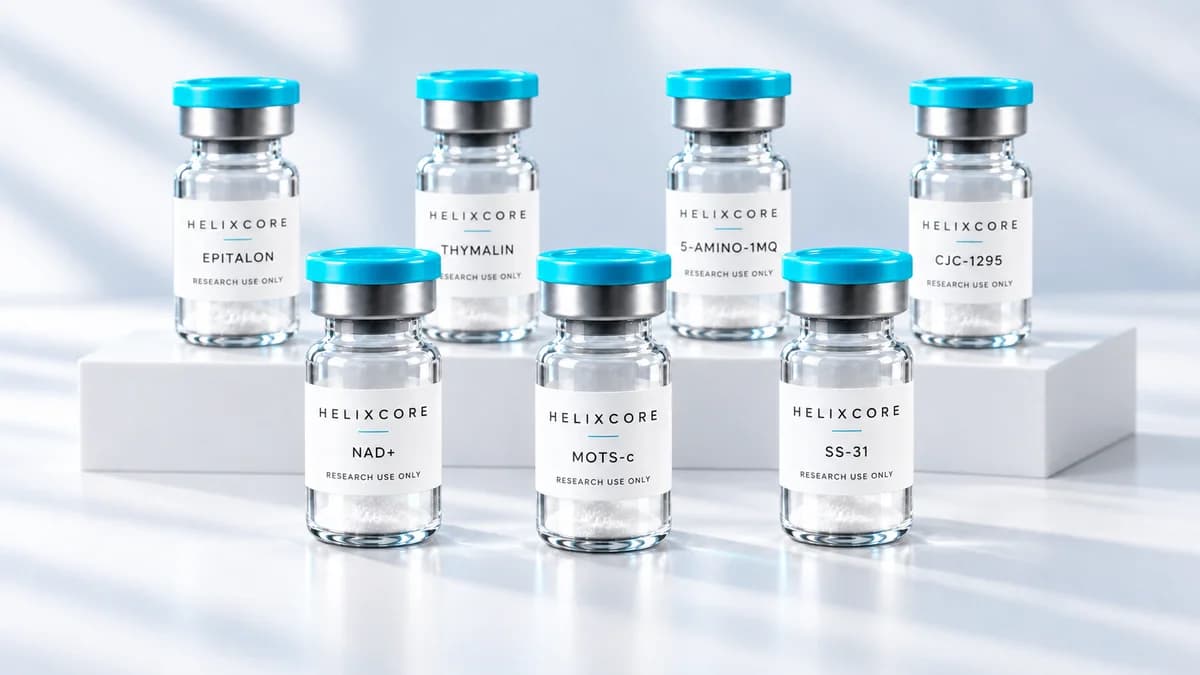
Mid-2026 has been an active stretch for research peptide work. New compounds have moved from obscure preclinical papers into more widely-studied territory, older compounds have accumulated additional research, and the "what UK researchers are actually buying" picture has shifted meaningfully from where it was 18 months ago.
This article looks at the seven peptides and research compounds seeing the most attention in current research circles — what each one is, the published research focus, and why each is on the list.
1. NAD+ — the cellular bioenergetics workhorse
NAD+ (nicotinamide adenine dinucleotide) is a coenzyme present in every cell, central to over 400 metabolic reactions, and a workhorse compound for any researcher working on cellular energy metabolism, sirtuin enzyme pathways, or DNA repair research.
2026 has continued the trend of NAD+ becoming a default reference compound in cellular ageing research — published work covers sirtuin enzyme activation, mitochondrial NAD+ metabolism, and PARP signalling axis investigations. View NAD+ 500mg.
2. 5-Amino-1MQ — NNMT inhibition
5-Amino-1MQ is a small-molecule inhibitor of nicotinamide N-methyltransferase (NNMT), an enzyme involved in cellular methyl donor metabolism and energy storage pathways. Research on NNMT has grown significantly because the pathway connects to several active questions in metabolic research: adipocyte lipid storage, energy expenditure regulation, and the broader link between methyl group availability and metabolic flexibility.
Most published work uses in-vitro adipocyte models to examine how NNMT inhibition affects lipid storage and mitochondrial activity. View 5-Amino-1MQ.
3. MOTS-c — mitochondrial-derived peptide research
MOTS-c is a 16-amino-acid peptide encoded within the mitochondrial 12S rRNA gene — making it one of the small but growing set of confirmed mitochondrial-derived peptides (MDPs). The research interest is in how mitochondrial-encoded peptides communicate with the nucleus and regulate metabolic pathways, particularly insulin sensitivity and glucose handling in cell-culture studies.
Published work has used myocyte and adipocyte cell lines to examine AMPK pathway activation and exercise-related metabolic adaptation models. View MOTS-c.
4. SS-31 (Elamipretide) — mitochondrial membrane research
SS-31, also known as Elamipretide, is a synthetic mitochondria-targeted tetrapeptide that binds to cardiolipin in the inner mitochondrial membrane. It's of increasing interest in research on mitochondrial membrane integrity, ATP production efficiency, and reactive oxygen species generation under cellular stress conditions.
Published work uses cardiac and skeletal muscle cell lines to examine mitochondrial function under stress. The compound has the additional characteristic of being studied through both an academic research path and a medicinal-development path (Stealth BioTherapeutics), giving researchers unusually rich literature to draw on. View SS-31.
5. Epitalon — the established longevity bioregulator
Epitalon is a synthetic tetrapeptide (Ala-Glu-Asp-Gly) from the bioregulator research tradition developed by Vladimir Khavinson's group. It's studied for its role in cellular ageing research — particularly its interaction with telomerase, the enzyme that maintains chromosome ends and is linked to cellular replicative capacity.
Published work has used fibroblast cell lines to examine effects on telomere length and senescence markers. Epitalon continues to be one of the most-studied of the pineal-derived bioregulators in 2026. View Epitalon.
6. CJC-1295 With DAC — sustained-action GHRH research
Among the GHRH analogues, CJC-1295 With DAC has seen sustained research attention through 2026 as a tool for distinguishing pulsatile vs sustained receptor activation in pituitary cell models. The DAC modification extends the peptide's effective half-life from minutes to days by binding it to serum albumin — useful for experiments comparing chronic vs acute receptor signalling.
See our full GHRH analogues comparison for how this compound sits in the broader category. View CJC-1295 With DAC.
7. Thymalin — the Khavinson immune bioregulator
Thymalin — a peptide complex originally extracted from thymus tissue, now produced synthetically — is one of the newer additions to the widely-studied bioregulator category. It sits in the same Khavinson family as Epitalon but targets a different research area: T-cell maturation, immunosenescence (age-related immune decline), and comparative thymic peptide research.
Published research uses cell-model studies of T-cell function and immune response. As the bioregulator category gains traction in 2026 outside the original Russian research base, Thymalin is one of the compounds seeing the strongest growth in interest. View Thymalin.
Notable mentions
BPC-157
Still one of the most-studied compounds in tissue research, even with continued debate over the underlying mechanism. See our BPC-157 research overview for the state of the literature.
The GLP-1 receptor agonist family
Semaglutide, Tirzepatide, Retatrutide and related compounds continue to drive enormous research interest, although the regulatory landscape for these compounds is distinct from the rest of the research peptide category. They sit closer to licensed medicines than to pure research chemicals.
LL-37
Innate immunity research continues to produce a strong stream of publications on LL-37 (the only human cathelicidin antimicrobial peptide). Both antimicrobial mechanism work and immunomodulation research remain active. View LL-37.
FOXO4-DRI (Proxofim)
Senolytic research has continued to generate interest in FOXO4-DRI for senescent cell elimination studies, although it remains a more specialised research tool than the broader cellular ageing compounds above.
How this list will change
Some of these compounds (NAD+, BPC-157, Epitalon) have been on "most-studied" lists for several years and aren't going anywhere. Others (5-Amino-1MQ, MOTS-c, Thymalin) have moved onto the list relatively recently because new published research has accelerated interest.
Worth following over the next 12 months:
- Mitochondrial-derived peptide research — the MDP category (MOTS-c, humanin, SHLPs) is still small but the published research base is growing
- Mitochondria-targeted compounds — SS-31 leads but more compounds in this category are likely to emerge from preclinical pipelines
- Senolytic peptide research — FOXO4-DRI and related compounds may see more attention as the senolytics field matures
- Bioregulator research outside Russia — the Khavinson tradition is gaining adoption in Western research labs, with Thymalin and Epitalon as the leading entry points
Bottom line
Mid-2026 research peptide interest has stabilised around a set of compounds covering cellular metabolism, mitochondrial function, cellular ageing, and bioregulator research. NAD+, 5-Amino-1MQ, MOTS-c, SS-31, Epitalon, CJC-1295 With DAC, and Thymalin between them cover most of the current research traffic.
HelixCore stocks all seven of these in UK inventory. All products are supplied with published batch certificates and source-reported figures. Same-day UK dispatch via Royal Mail Tracked 24.
Browse the full catalogue or read our beginner's guide if you're new to the field.